
Lake of the Woods County Civil Docket Searches
Civil cases in Lake of the Woods County run through Minnesota's unified District Court system. The public's main online tool is MCRO Case Search, a free state portal. You can look up a matter by name, case number, attorney, or business. Then pick Civil. Set the county filter to Lake of the Woods. Family, Probate, and Mental Health cases sit under their own MCRO headings. That split matters. Court Administration for the county keeps every one of those divisions in a single office.
A case number gives the cleanest Lake of the Woods County civil docket search. A party name with the county filter works too. Open Case Details. The Register of Actions appears, listing parties, filing dates, events, hearing entries, documents, and public outcomes in order. Want the actual filings? MCRO Document Search demands the full case number. Money judgments dockets live in a separate tool that searches by debtor name instead.
- Open MCRO Case Search and accept the public-access terms.
- Choose a name, business, attorney, or case-number path, then select Civil and Lake of the Woods County when appropriate.
- Review matching results for the caption, filing date, case type, and court before opening Case Details.
- Read filings, settings, motions, orders, and later judgment entries in the Register of Actions.
- Use Document Search with the complete number or ask Court Administration for the public terminal and copy options.
The MCRO Document Search form requires the complete Lake of the Woods civil case number, so have it ready before you begin a docket search.
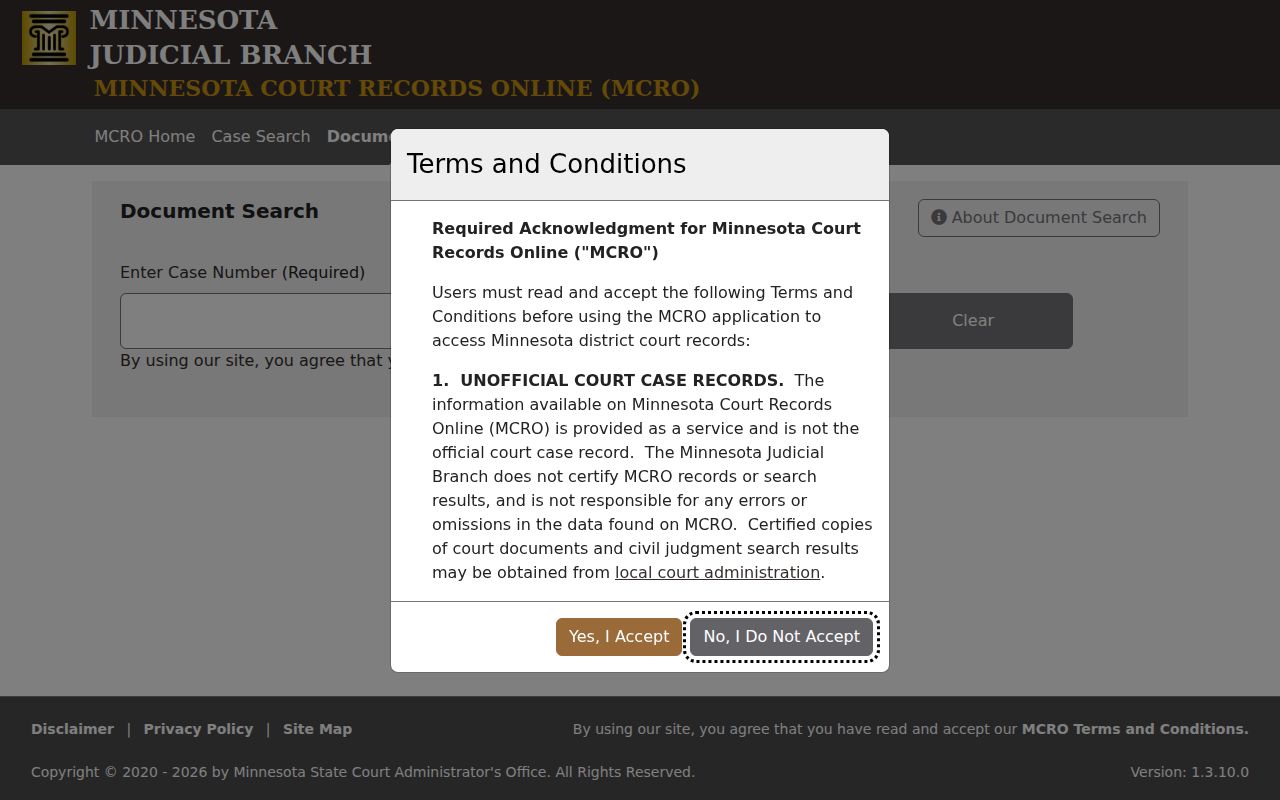
Document Search reaches eligible public papers. But Case Details is where you read the fuller event history.
Lake of the Woods Civil Case Numbers
Lake of the Woods civil court files carry the county prefix 39. A standard civil case number begins 39-CV-. Conciliation Court uses 39-CO-, family cases use 39-FA-, and probate uses 39-PR-. The prefix tells you the court category, nothing more. It says nothing about the merits or the final result. For that answer, read the Register's Dispositions and the controlling order or judgment.
These codes keep a Lake of the Woods case search from blending court categories together. They also explain a common trap. Someone hunting a small claim, family filing, or probate case should not expect a plain Civil-only filter to surface those records. The statewide portal offers category choices. The local court keeps many files in one place.
- Caption
- The case title shown with the case number and parties.
- Petitioner or plaintiff
- The party who starts a petition or civil claim.
- Respondent or defendant
- The party named to answer or respond to the claim.
Civil Dockets: What They Show
A Lake of the Woods civil Register of Actions opens in a fixed way. First comes the case header. Then the party blocks. From there it records the complaint or petition, summons, answer, notices, motions, orders, hearings, and later outcome. Judgment information, costs, satisfaction, execution, or an appeal may appear too, when those entries are public. Read in date order. That habit separates a mere request from an actual court ruling.
| Case header | County-code number, filing date, court, category, status, caption, and officer. |
|---|---|
| Parties | Plaintiff or petitioner, defendant or respondent, attorney, and intervenor when listed. |
| Commencement | Complaint, petition, summons, affidavit, service, answer, or other early paper. |
| Events | Motions, notices, orders, continuances, hearings, trials, dismissals, and judgments. |
| Financial entries | Judgment amount, costs, fees, satisfaction, or balance where entered. |
| Documents | Eligible public pleadings, orders, judgments, and notices with access limits. |
Docket details in a Lake of the Woods civil case can name a filed paper and its date. Still, the order or judgment itself is the better source for the court's result.
Lake of the Woods Conciliation Court Claims
Conciliation Court is a division of the Lake of the Woods District Court. It is not a separate county court. Under Minn. Stat. §491A.01, ordinary conciliation claims generally may not exceed $20,000. Consumer-credit claims carry a $4,000 limit. A conciliation file here commonly follows the 39-CO- pattern and stays with Court Administration.
That unified structure is why MCRO category selection matters. A Conciliation judgment can be removed to District Court for a new trial. This happens under the applicable rules. The record may then show a relationship, removal, appeal, or new case event. The case number plus the later Register of Actions entries trace that movement.
For the Lake of the Woods civil claim limits, one source governs. The Conciliation Court statute sets the limits.
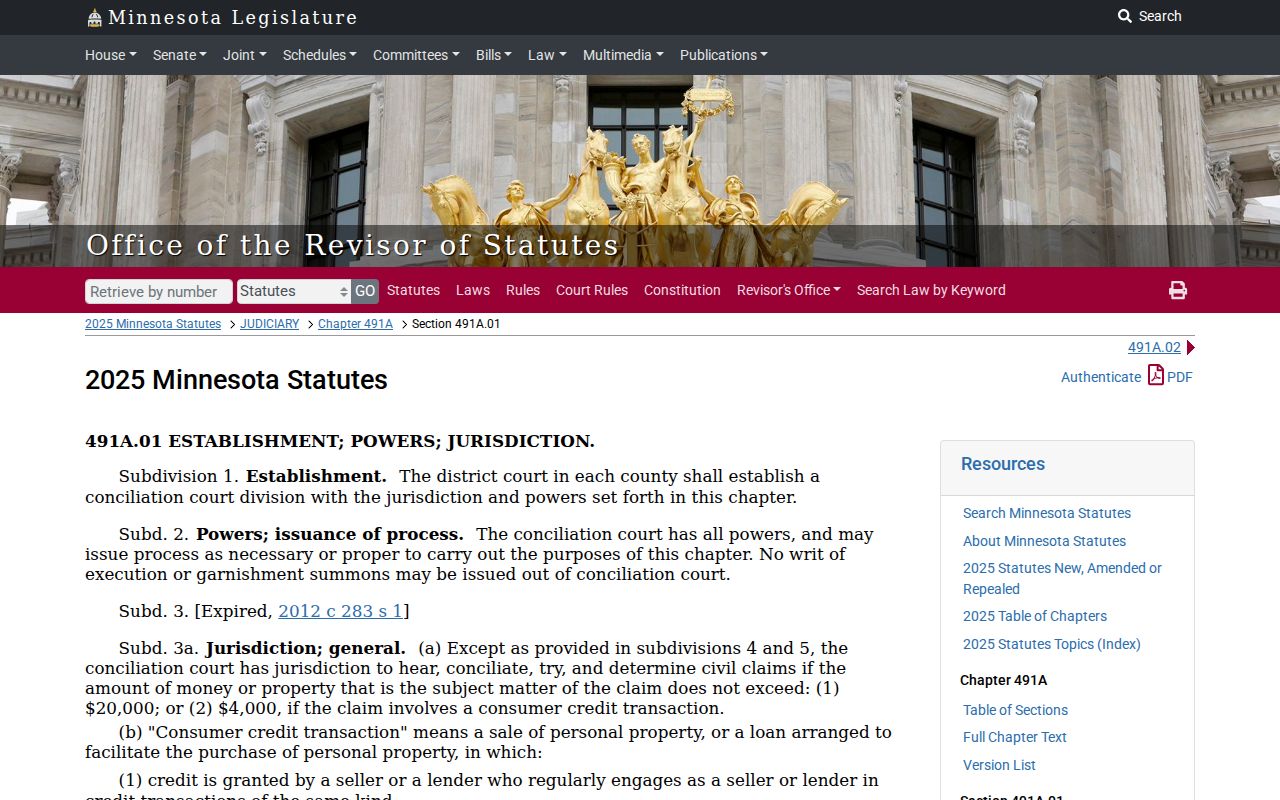
The statutory limits define the division's role. They do not replace checking the particular case category and court record.
What Cases Fill the Civil Docket
Lake of the Woods Court Administration is one office. It handles Civil, Conciliation, Family, Probate, and Tax record administration there. So the civil docket can hold ordinary civil matters. It may also include small claims and public portions of other trial-court categories. Each comes with its own case prefix and access limits. A category title shows the type of file. It says nothing about whether the case was won, dismissed, paid, or appealed.
| Lake of the Woods case path | Common prefix | Search approach |
|---|---|---|
| Ordinary civil | 39-CV- | Choose Civil in MCRO Case Search. |
| Conciliation | 39-CO- | Use the case number or the related civil search path. |
| Family | 39-FA- | Use the Family category and observe remote document limits. |
| Probate | 39-PR- | Use Probate or Mental Health where appropriate. |
Lake of the Woods County has no separate county-court-at-law path for these cases. When a category or an older file needs clarification, the local District Court page and Court Administration are the county's record channels.
Lake of the Woods Motion and Order Records
A motion is a request for a court order. It is not a ruling. Lake of the Woods civil dockets may list a motion filing, a notice of motion, a hearing, an order, and a later judgment as separate entries. Stopping at the first motion event gives a false picture of what the court actually did. Find the order or hearing result that follows it.
| Docket entry | What it means |
|---|---|
| Motion filed | A party asked the court to act; no decision is shown by that entry alone. |
| Hearing or setting | The matter was placed on a court schedule and may later be continued or reset. |
| Order entered | The court issued a direction that should be read for scope and date. |
| Judgment or dismissal | A disposition that may end the case or create later enforcement entries. |
Minnesota eFile and eServe handles electronic filing and service across Minnesota courts. Lake of the Woods County is included. Filings, motions, and served papers all flow through it. Reading a Lake of the Woods civil docket still comes down to one habit. A motion entry is a request, nothing more. It asks the court to act. Only a later order or hearing result shows what the judge actually decided. That habit matters most when the docket lists default, nonsuit, dismissal, settlement, satisfaction, execution, or appeal. The outcome lives in the sequence of entries, not in any single label.
Hearings on the Civil Docket
Hearing entries carry a label. In a Lake of the Woods civil docket, that label might point to a conciliation hearing, pretrial, motion hearing, trial, status setting, review hearing, or family hearing. The Lake of the Woods public court calendar prints its own terms, such as Conciliation, Pre-trial, Hearing, and Review Hearing. The Register of Actions gives the case-specific history. Treat the calendar as a schedule check. It posts every business day and updates hourly. A printed copy outside the courtroom or in the lobby is the most current version of all. One caution: an entry left off the public calendar does not prove a cancellation, because access rules can limit what gets published.
Compare MCRO Hearing Search or Case Details with the court notice if a Lake of the Woods civil setting looks unclear. Then call Court Administration at (218) 634-1451. A reset or continuance just changes the setting. It is not a dismissal unless a separate disposition or order says so.
Lake of the Woods Judgment Docket Searches
MCRO Judgment Search does one job well. It tracks docketed monetary judgments by debtor name. Date and county controls narrow the results. It does not replace a full Lake of the Woods civil case search, and nonmonetary outcomes stay off the list. Start with Case Search when the goal is pleadings, hearings, motions, or the entire Register of Actions. That record tells the fuller story.
After judgment, the docket may show satisfaction or partial satisfaction, a transcript, writ, garnishment, execution, or appeal. The financial balance sits apart from the original pleading. Read any result with the judgment and the later docket entries, since one hit is not the full account of the civil case.
The MCRO Judgment Search is the official interface for this Lake of the Woods civil-record path.
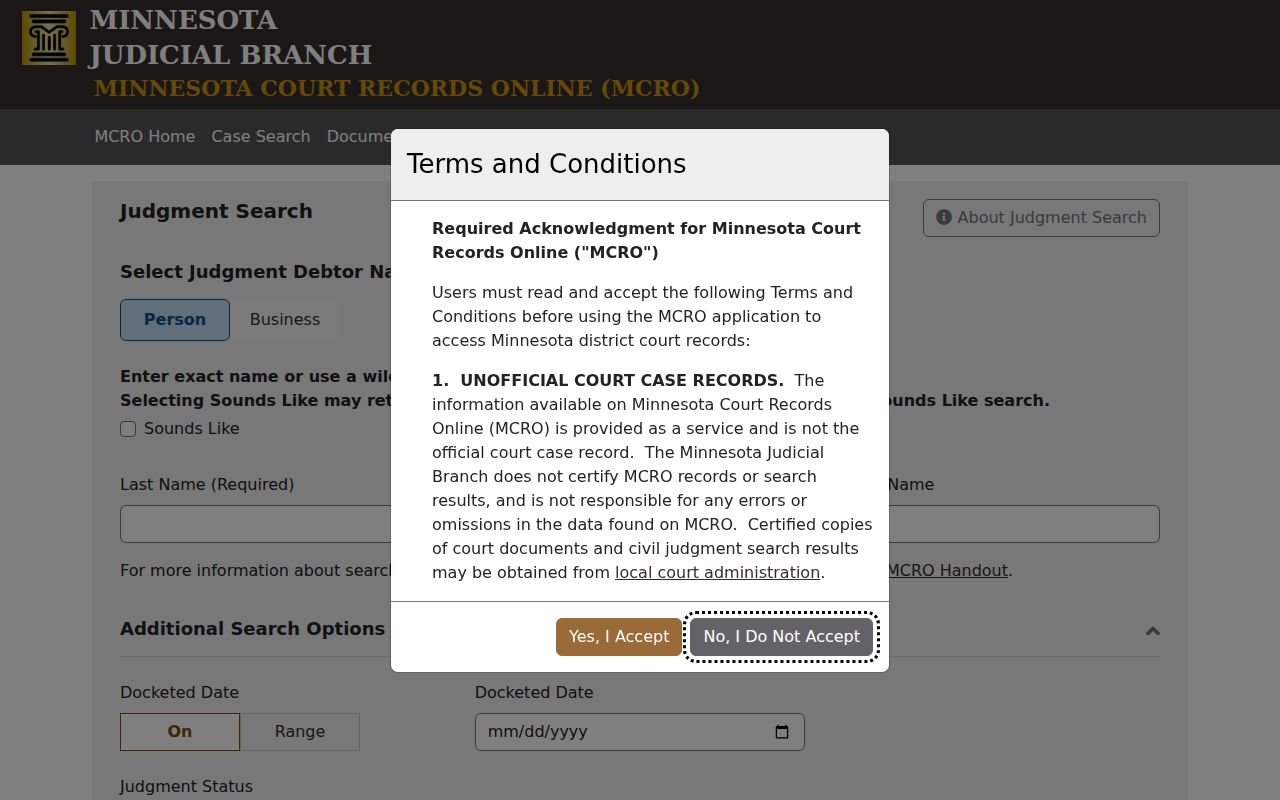
The debtor-name setup suits a search for docketed money judgments. For the full case record, though, the case number is the most precise route.
Who Can See Civil Dockets
Minnesota Rules of Public Access govern who may see Lake of the Woods civil dockets. Rule 2 sets the baseline policy. Other rules mark what stays nonpublic. MCRO is an unofficial public display. It is not a certified court record, and Court Administration with the courthouse terminal remains the route for inspection and the broader public electronic layer.
Remote access limits:
Rule 4 identifies restricted case-record categories and protected material.
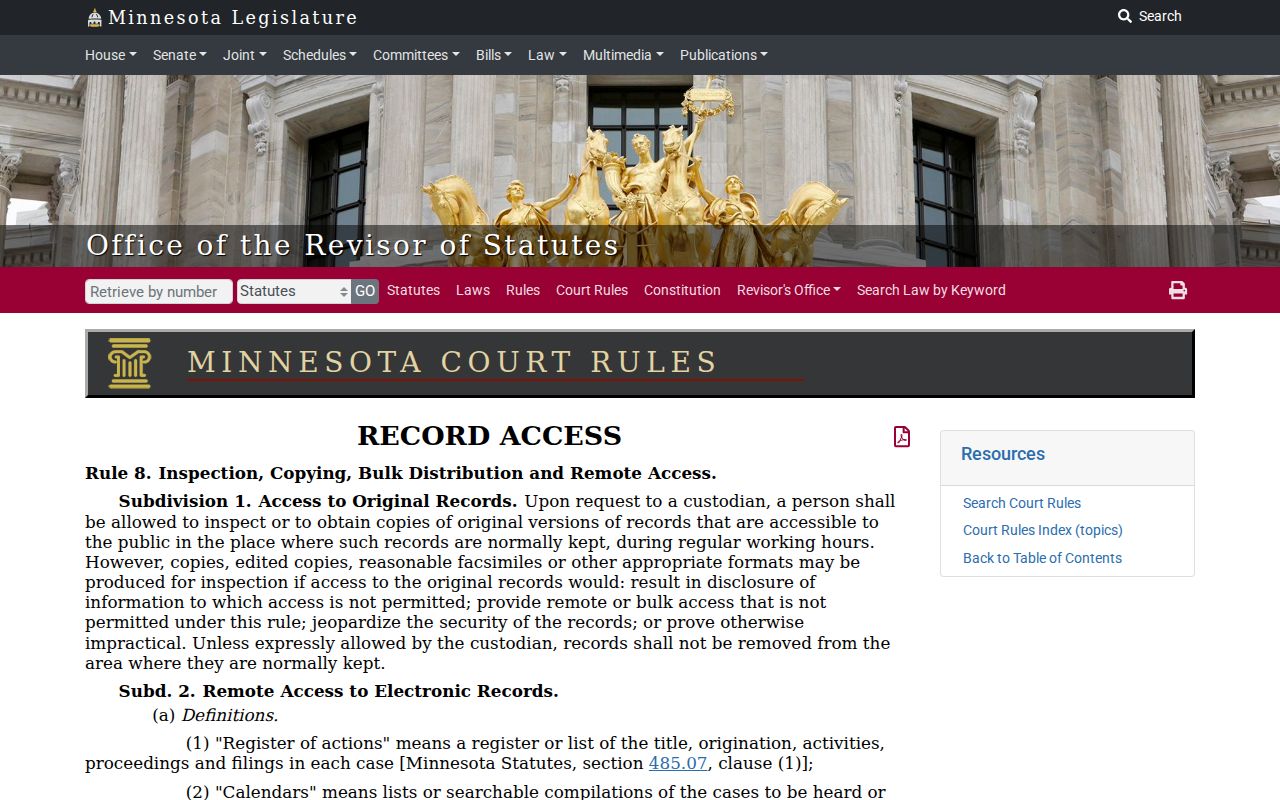
Rule 8 addresses inspection, copying, remote access, and restricted identifiers.
Family remote documents are narrower: public court-generated orders, opinions, and notices can be available while party-submitted affidavits and sensitive filings are limited.
The Rule 2 public-access policy supports open Lake of the Woods civil docket access.
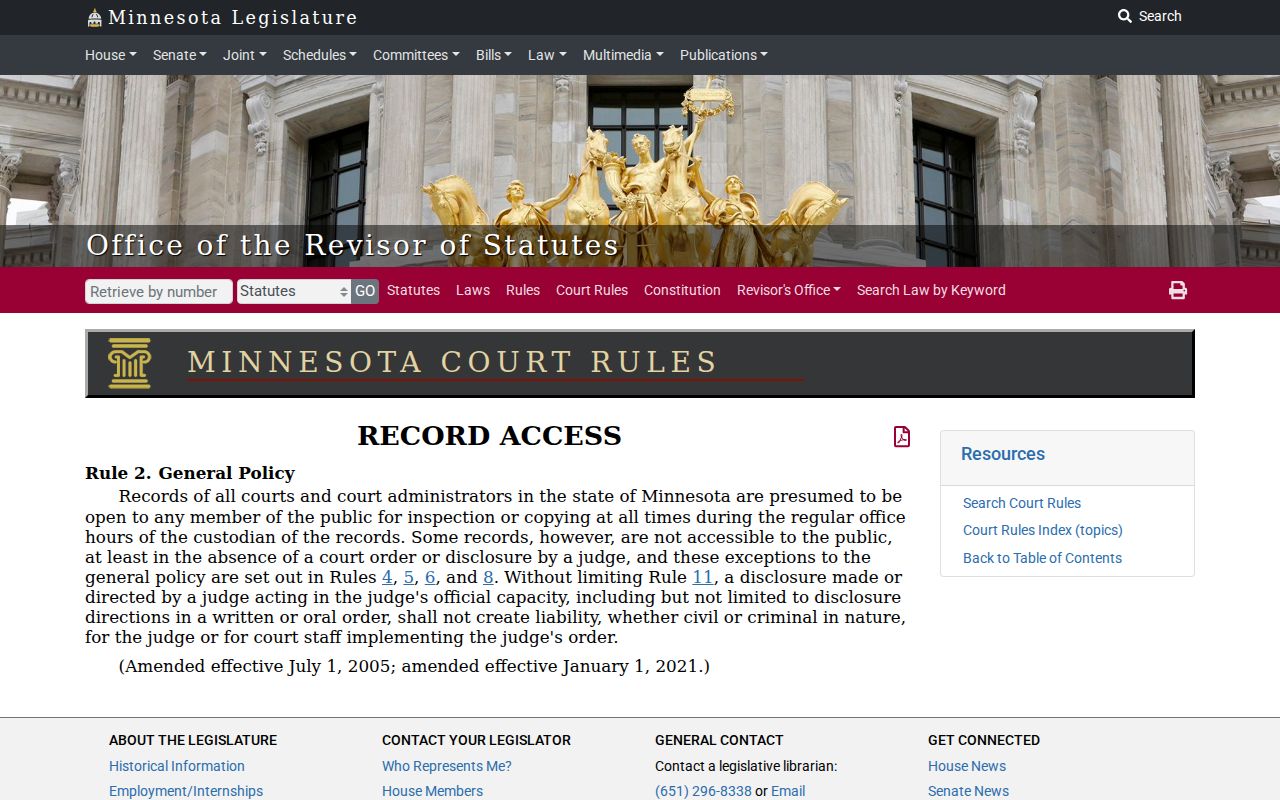
Public access still depends on the record's category. A protection on a filing can limit it too. The Rule 8 inspection and remote-access rule explains why a Lake of the Woods civil document may be open for inspection in the office yet unavailable online.
A limited remote result is not the end. Court Administration can identify the authorized inspection or copy path for the public record.
Lake of the Woods Civil Copy Fees
Eligible Lake of the Woods civil records download from MCRO without charge. Certification is different. Only Court Administration provides it. A certified copy is not the same as a downloaded PDF or a watermarked display. An old paper file may warrant a call before a visit, because the county court page publishes no separate civil-record request form or retention schedule.
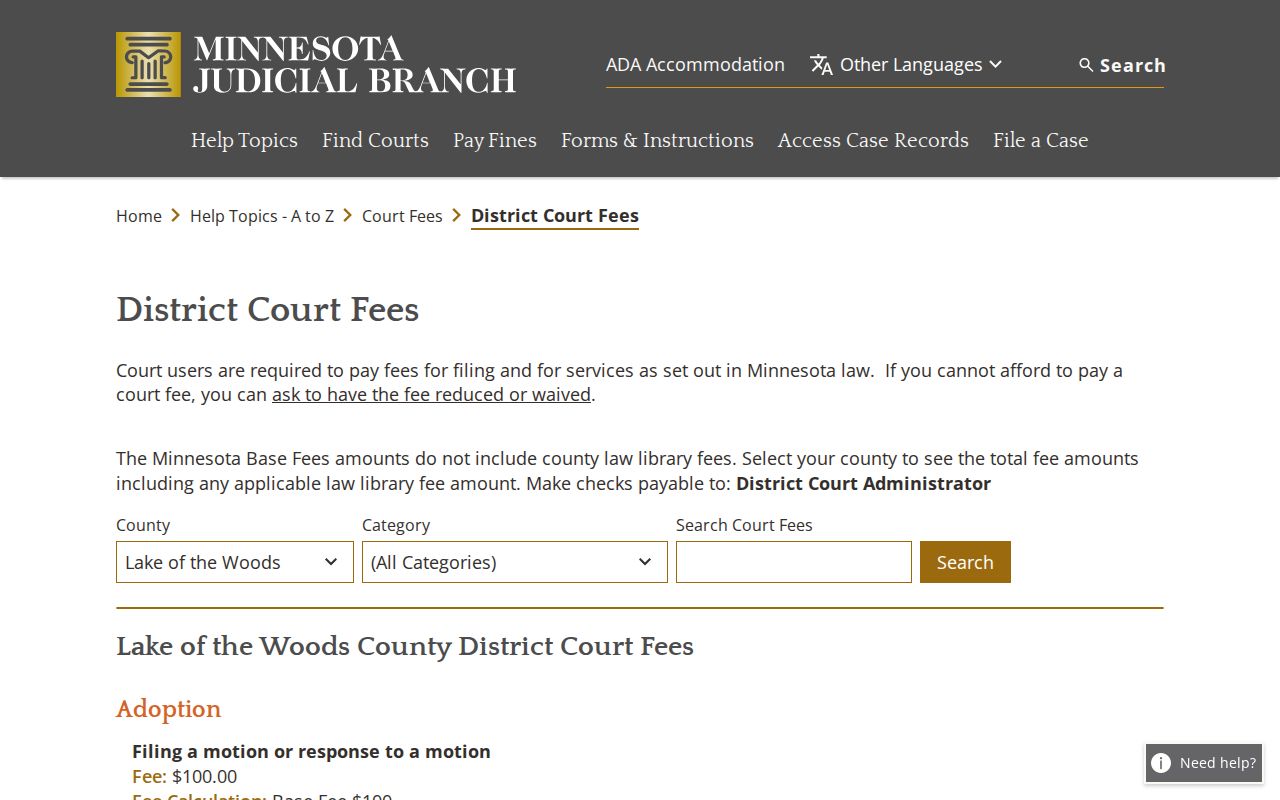
| Lake of the Woods civil record service | Current displayed amount |
|---|---|
| Uncertified civil instrument or courthouse printout | $0 |
| Certified instrument, imaged document, or screen print | $14 |
| Exemplified and certified copy | $28 |
| Case-management report, first 1-50 pages | $5 |
| Case-management report, each later 50 pages or part | $25 |
The county-filtered District Court fee page is the source for these amounts.
Fees and handling details can change. Confirm everything with Court Administration first. That means the document, the number of copies, your certification choice, the payment method, and delivery instructions.
Note: A written Lake of the Woods request works best when it names the parties, the case number, the exact document, the copy type, a return address, a daytime phone, and the requested payment method.